




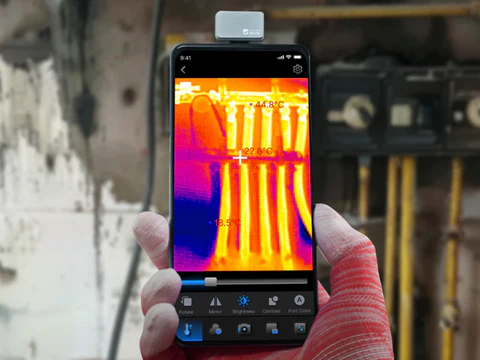
A phone camera shows what the eye already understands: shape, color, light, and damage on the surface. The best smartphone attachments add a second layer, letting a contractor, homeowner, mechanic, or facilities worker see heat patterns that point toward air leaks, weak insulation, overloaded circuits, damp walls, or HVAC trouble. That is why interest in phone-based thermal imaging has moved beyond gadget talk and into everyday inspection work across the USA. For readers tracking practical device trends through inspection technology updates, the point is not that a pocket add-on replaces a full professional imager. It usually does not. The real value is speed. You can scan a ceiling stain before calling a roofer, check a breaker panel before it becomes a service visit, or document a cold bedroom before spending money on guesses. A phone thermal camera turns the device already in your hand into a first-pass inspection tool, and that shift changes who gets to notice problems early.
Why Smartphone Attachments Changed Everyday Inspection Work
Thermal imaging used to feel locked behind trade gear, training, and high prices. That barrier has dropped. Current phone-connected models now cover common inspection jobs like checking electrical panels, HVAC failures, and hidden water damage, which FLIR lists as core uses for its phone-compatible thermal camera series.
The phone became the report, not only the screen
The strongest part of a thermal add-on is not the sensor alone. It is the phone behind it. You can capture an image, mark the location, add a note, send it to a landlord, compare it with last month’s scan, or drop it into a work order before leaving the room.
That matters on small jobs. A homeowner in Ohio may not know whether a chilly wall means missing insulation, air movement, or normal winter behavior. A quick image does not settle the whole case, but it gives the next call more substance. “The bedroom is cold” becomes “the wall-to-ceiling seam shows a cold streak.”
The non-obvious part is this: a lower-grade thermal image with good notes may beat a sharper image that never gets shared. Inspection work is often about memory and proof. The phone handles both.
What heat patterns can and cannot prove
A thermal image does not see through drywall. It reads surface temperature patterns. That difference matters because the same cold spot can come from missing insulation, moving air, damp material, or a shadowed surface that cooled faster than nearby areas.
The Pacific Northwest National Laboratory’s Building America guidance explains that an infrared camera detects heat rather than visible light and can reveal missing insulation or air leakage; it also notes that depressurizing a home can help expose leakage paths. That is a useful guardrail. The image points you toward a question. It is not the whole answer.
Say you scan a ranch house in Michigan after sunset. A dark line near a ceiling register could mean displaced attic insulation, duct leakage, or a gap around the boot. The scan earns a closer look. It does not give permission to cut the ceiling open on faith.
Phone Thermal Camera Uses Around American Homes
Residential use is where these tools feel most personal. A cold room, a warm outlet, a damp basement corner, or a ceiling stain can make a homeowner nervous because the expensive part is hidden. Thermal imaging gives you a calmer way to sort fear from evidence.
Drafts, insulation gaps, and comfort complaints
A phone thermal camera is useful when a room never feels right. In a Minneapolis winter, you might scan around a window, baseboard, attic hatch, and ceiling seam. Cold streaks around trim often suggest moving air. Broad cold rectangles can point toward weak insulation.
The Department of Energy says many professional home energy assessments include blower door testing and thermographic scans, and it lists air sealing, adding insulation, duct sealing, moisture repair, and HVAC improvements as common recommendations. That should shape how homeowners use these devices. The scan is a triage tool, not a repair plan by itself.
Here is the counterintuitive part: the best scan may happen under “bad” comfort conditions. A mild spring afternoon gives weak contrast. A cold evening in Buffalo or a hot Phoenix attic day gives the camera more difference to read. Heat has to be moving for the pattern to speak.
Moisture clues without pretending to be a leak detector
Thermal cameras do not identify water the way a moisture meter does. They often show temperature changes caused by evaporation, wet material, or hidden airflow. That makes them useful, but also easy to misread.
Think of a bathroom ceiling below a second-floor shower. A cooler patch may suggest dampness. It may also be a poorly insulated bay or an air path from the attic. The better move is to scan, take a photo, check with a moisture meter, and then decide whether a plumber or roofer needs to get involved.
This is where home inspection tools work best as a set. The thermal image narrows the area. The moisture meter checks the suspicion. The plain photo shows the stain. Your notes connect the dots. One tool rarely carries the whole case.
Infrared Camera for Phones in Trades and Field Service
Trade use is more demanding because the cost of being wrong can be higher. Electricians, HVAC techs, maintenance workers, and remodelers need repeatable habits, not toy-like scans. The good news is that phone-based thermal tools now fit many first-pass checks.
Electrical and mechanical checks need caution
FLIR’s ONE Pro lists a 160 × 120 native thermal resolution, enhanced output, about one hour of battery life, and object temperature ranges up to 400°C, depending on mode. It also lists typical accuracy limits and operating temperature requirements. Those specs are enough for many visible pattern checks, but they do not turn a phone add-on into a full electrical safety program.
A facility worker in Dallas might scan a breaker panel and find one breaker running hotter than its neighbors. That is useful. But the next step is still safe work practice, load checks, torque checks, and a qualified person deciding what the heat means.
The odd truth is that thermal cameras can make people too confident. A normal-looking panel image does not prove the panel is safe. A hot spot tells you where to look. A clean scan only tells you that the camera did not catch an obvious heat pattern under those conditions.
HVAC work rewards fast comparison
HVAC diagnostics are often about comparing one area with another. A phone-connected imager can scan supply registers, return grilles, condenser coils, refrigerant lines, duct seams, and attic runs. You are looking for pattern breaks, not pretty colors.
In a Texas strip mall, a tech might scan six ceiling diffusers before climbing a ladder. Five show similar output. One looks weak. That does not diagnose the fault, but it helps aim the next ten minutes. On a busy service day, that matters.
An infrared camera for phones also helps with customer trust. A homeowner may not understand static pressure, duct restrictions, or coil temperature split. They can understand a register image that looks different from the rest. The image turns a hidden system into something visible enough to discuss.
Choosing Specs Without Getting Fooled by Marketing
Spec sheets can mislead casual buyers. Bigger numbers feel safer, but inspection value comes from fit: resolution, sensitivity, focus distance, temperature range, app quality, battery behavior, and phone compatibility. A $250 tool that matches the job can beat a pricier unit bought for the wrong reason.
Resolution, sensitivity, and focus matter in different ways
Resolution controls how much detail the sensor captures. Sensitivity, often shown as NETD, affects how small a temperature difference the camera can notice. Focus distance matters when you inspect small objects, boards, outlets, or tight mechanical parts.
FLIR’s Edge Pro, for example, uses a 160 × 120 native thermal sensor with enhanced output, a wider wireless design, around 2.5 hours of battery life, and visual plus thermal image modes. The design tradeoff is clear: it is less tied to the phone port and better for awkward angles, but it still has the resolution limits of its sensor class.
Newer Android-focused dongles have pushed higher sensor counts in small bodies. TechRadar’s 2026 Thermal Master P4 review describes a 256 × 192 sensor, 25 Hz frame rate, mixed thermal and visible modes, and Android-only compatibility. That is attractive for building and HVAC work, but iPhone owners should not buy on specs alone.
Compatibility can be the hidden deal breaker
USB-C has helped, but it has not erased friction. Some cameras support iPhone and Android. Some support only Android. Some draw power from the phone. Others carry their own battery. Some work better with a short extension cable so the phone does not block the scan angle.
This is where buyers waste money. They compare resolution, then ignore the job. An inspector who crawls under houses may prefer a wireless camera that can be held away from the screen. A repair tech checking circuit boards may care more about close focus. A landlord checking rental units may need fast photo export more than high frame rate.
For readers comparing home inspection tools, the best question is plain: “What problem will I scan every week?” If the answer is drafty rooms and roof stains, buy for building patterns. If the answer is electronics repair, buy for close focus and stable mounting.
Conclusion
Thermal imaging is no longer a strange extra reserved for large crews and specialty reports. It has become a practical first look for people who want better questions before they spend money. That is the healthy way to treat it. A small camera on a phone can expose a suspicious ceiling patch, a cold wall seam, a weak HVAC register, or an electrical hot spot worth checking. It can also tempt you into guessing.
The future of smartphone attachments in inspection work will belong to people who use them with discipline. Scan under the right conditions. Compare similar surfaces. Save the image. Check with another tool when moisture, electricity, or safety is involved. Bring in a pro when the risk is above your comfort level.
The phone will not become a licensed inspector in your pocket. Better than that, it can become a sharper set of eyes before the real inspection begins.
Frequently Asked Questions
How much does a phone thermal camera usually cost?
Most consumer and light-pro phone-connected models sit from the low hundreds to around $500, depending on resolution, app features, temperature range, and brand. Cheaper units can still help with drafts and simple scans, but trade work usually needs better sensitivity and support.
Is a phone thermal camera worth it for homeowners?
Yes, when you use it for first-pass checks. It can help spot draft paths, weak insulation areas, HVAC imbalance, and suspicious damp zones. It is less useful when you expect it to diagnose the cause without a moisture meter, blower door, or trade knowledge.
Can thermal imaging find water leaks inside walls?
It can show surface temperature patterns that may suggest moisture, but it cannot prove a leak by itself. Wet areas often cool differently, especially during evaporation. A moisture meter, plumbing check, or roof inspection should confirm what the image appears to show.
What is the best use for an infrared camera for phones?
The best use is fast comparison. Scan similar outlets, vents, wall sections, or panel areas and look for the odd one. Thermal tools work better when you compare patterns under the same conditions instead of judging one colorful image alone.
Can a phone thermal camera detect electrical problems?
It can reveal warmer components that may deserve closer inspection, such as overloaded breakers, loose connections, or uneven heating. It should never replace electrical testing or safe work rules. Treat a hot spot as a warning sign, not a final diagnosis.
Do thermal cameras work better in winter or summer?
They work best when there is a strong temperature difference between indoors and outdoors or between operating and non-operating equipment. Winter helps reveal heat loss and drafts. Summer can help show attic heat, weak cooling, and some HVAC performance issues.
What specs matter most when buying one?
Resolution, thermal sensitivity, focus distance, temperature range, phone compatibility, app quality, and battery behavior matter most. For buildings, pattern clarity matters. For electronics or small parts, close focus matters more. For field work, durability and export options matter.
Can renters use thermal imaging before calling a landlord?
Yes, renters can document cold walls, window drafts, weak vents, or damp-looking areas with images and notes. Keep the message practical and calm. A thermal image helps explain the complaint, but the landlord may still need a contractor to verify the cause.