




American PC builders keep hearing one question in forums, parts lists, and upgrade videos: should you buy DDR5 now, or wait for the next jump? The DDR6 RAM Specification is not a buy-now shopping list yet. It is a roadmap signal. LPDDR6 has already reached a formal JEDEC-defined stage, aimed first at mobile, AI, and power-sensitive devices, while full desktop and server DDR6 remains less settled in public timelines. That matters because the first wave will not land evenly. A gamer in Ohio, a video editor in California, and a small business running local AI workloads in Texas will feel the shift at different times. For practical technology market analysis, the safe view is this: DDR5 still makes sense for current builds, but the DDR6 release timeline is becoming important for people planning premium systems beyond the next normal upgrade cycle.
Why DDR6 Is Not a Simple Speed Bump
The memory market has a habit of turning every new generation into a bigger number on a box. That misses the point. DDR6 is not only about higher transfer rates. It is about feeding CPUs that keep adding cores, AI engines that hate waiting, and systems where power draw now affects the whole design.
Why DDR5 Still Has Room Left
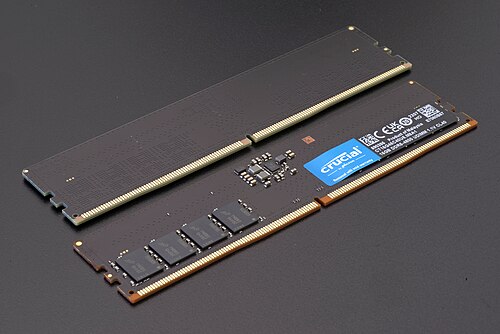
DDR5 is not dead because a successor is forming. That is the first trap many buyers fall into. Micron’s DDR5 material lists modern DDR5 RDIMM speeds up to 9200 MT/s and MRDIMM up to 8800 MT/s, with DDR5 already offering up to twice the effective memory bandwidth of DDR4 at 3200 MT/s. In plain English, the current platform still has plenty of runway.
You see this in real systems. A midrange gaming PC with a Ryzen or Intel Core chip usually gains more from a better GPU, cleaner airflow, or a larger SSD than from chasing future memory. Even workstation users in the U.S. often hit storage, cooling, or software limits before memory speed becomes the main choke point.
The non-obvious part is that late-generation DDR5 may age better than early DDR6. First-wave memory often costs more, has looser timings, and needs new motherboards. A mature DDR5 kit on a stable board can feel cleaner than early hardware that wins only in synthetic tests.
Why The Next Shift Is Still Worth Watching
DDR6 matters because the workloads are changing under the buyer’s feet. Local AI tools, 8K media timelines, large code builds, CAD models, and heavy browser sessions all ask for fast movement between memory and compute. The pain is not always a crash. Sometimes it is a stutter, a long export, or a machine that feels tired when too many tasks are open.
That is where DDR6 vs DDR5 becomes more than a spec-sheet fight. DDR5 widened the road compared with DDR4. DDR6 is expected to change how the lanes are arranged. Reports around the developing standard point to higher starting transfer rates and a more parallel channel layout, though final public desktop details should still be treated with care until standards and platforms are locked.
A useful way to think about it is not “more speed.” Think “less waiting.” A CPU core that asks memory for data and sits idle is wasting silicon. Faster memory can help, but only when the task is memory-bound. That is why some apps will shine and others will barely notice.
DDR6 RAM Specification Signals Bigger Changes Than Raw Speed
The next useful question is what changes first. The answer is not price. It is not RGB. It is the way data moves. Memory generations become meaningful when the new design solves a pressure the old design can no longer handle neatly.
Channel Layout May Matter More Than Headline MT/s
DDR5 split each module into two independent 32-bit sub-channels. That change helped systems handle smaller access patterns better than older single-channel designs. LPDDR6 reporting points to four 24-bit sub-channels, while industry DDR6 coverage has discussed similar movement toward more parallel paths for future desktop and server memory.
That sounds dry until you picture a busy checkout line. Two wide lanes can still jam if many people arrive with different needs. Four narrower lanes can move mixed traffic with less waiting. The total width is not the whole story. The scheduling matters.
For a U.S. buyer, this could show up in boring but welcome ways. A workstation might scrub through a large Premiere Pro project while background tasks keep running. A developer machine might build code while Docker containers stay active. A gaming PC might not gain huge average FPS, yet minimum frame rates could improve in select memory-bound titles.
Compatibility Will Be The Hard Stop
No one should expect a drop-in upgrade. DDR5 and DDR4 are physically and electrically incompatible, and the same pattern should be expected when the next mainstream desktop memory generation arrives. Micron’s DDR5 FAQ is clear that DDR5 only fits DDR5 motherboards, and DDR4 only fits DDR4 motherboards. New memory means new platform support.
That means new CPUs, new boards, fresh BIOS work, and early pricing. This is why the DDR6 release timeline matters more than a rumored module date. Memory sticks can exist before normal buyers should care. Platform support is the real launch.
A concrete example: when DDR5 first reached consumer PCs, early adopters paid more and saw mixed gains depending on the app. The larger payoff came later, once CPUs, motherboards, memory kits, and firmware matured together. DDR6 is likely to follow that same rhythm, even if the early numbers look exciting.
Release Timing: What Buyers Should Expect
Timelines in memory are rarely clean. Standards groups, DRAM makers, motherboard vendors, CPU designers, and OEMs all move at different speeds. A standard can be published, samples can exist, and retail shelves can still be far away.
The Near-Term Path Starts Outside Normal Desktops
LPDDR6 gives us the clearest early signal. JEDEC’s JESD209-6 standard has been reported as published, with LPDDR6 aimed at mobile, edge AI, automotive, and power-sensitive systems before ordinary desktops. That means the first user experience may arrive in premium laptops, compact AI devices, and specialized systems rather than DIY towers.
That order makes sense. Laptops care deeply about power, heat, and space. LPDDR designs are often soldered down, so OEMs can tune the whole board. Desktop buyers want removable modules, long compatibility windows, and lower prices. Those goals slow adoption.
The DDR6 release timeline for mainstream desktops should be read as a window, not a promise. Some reports point toward late-2020s adoption, while SK hynix’s public roadmap coverage placed DDR6 closer to 2029 or 2030 for its broader DRAM path. That gap is not confusion. It reflects different markets.
Early DDR6 Will Likely Belong To Expensive Systems
The first wave is likely to favor servers, AI machines, high-end workstations, and flagship OEM designs. That is where buyers can pay for bandwidth. It is also where memory bottlenecks cost money. A data center running heavy inference work has a stronger reason to adopt early than a student building a $900 gaming PC.
This is the part many upgrade guides get wrong. New memory does not become mainstream when the first demo appears. It becomes mainstream when the platform is cheap enough, stable enough, and common enough that motherboard makers stop treating it as exotic.
For most local American buyers, the smart move is simple. Buy DDR5 if you need a PC now. Wait only if your next build is already planned around a late-cycle premium platform. The opportunity cost of delaying a useful machine can be higher than the gain from waiting.
Performance Gains Over DDR5 Will Depend On The Workload
The phrase “performance gains” needs discipline. A faster memory standard does not make every app faster by the same amount. Some tasks drink bandwidth. Some sip it. Some barely touch the glass.
Where Memory Bandwidth Gains Will Feel Real
Memory bandwidth gains should matter most in workloads that move large data sets often. Think integrated graphics, CPU rendering, scientific models, local AI inference, compression, virtual machines, and large creative projects. These jobs can punish a system when memory cannot feed the processor fast enough.
A home example works here. A creator editing high-bitrate video in Chicago may not care about a benchmark chart. They care when the timeline stops hitching while color tools, browser tabs, and audio plugins are open. More bandwidth can help that kind of mess, especially when the whole platform is built for it.
DDR6 vs DDR5 will also matter for systems without giant dedicated GPUs. Integrated graphics and compact PCs share system memory. When that shared pool gets faster, the graphics side can benefit more clearly than a desktop with a powerful graphics card and its own VRAM.
Where The Gains May Look Smaller
Gaming will be mixed. Some esports titles love low latency and fast memory. Some big open-world games care more about GPU power, CPU cache, storage streaming, or engine design. A new memory kit cannot fix a weak graphics card or poor thermal setup.
The same caution applies to office work. A dentist’s front-desk PC in Florida will not feel changed because the memory standard advanced. Email, web apps, spreadsheets, and billing tools already run well on current platforms. Spending early-adopter money there would be waste.
Here is the counterintuitive truth: the best memory upgrade is sometimes capacity, not speed. A 64GB DDR5 system that avoids swapping to disk can beat a faster but smaller setup in real work. Memory bandwidth gains matter after you have enough memory to keep the job in RAM.
Conclusion
The next memory wave deserves attention, but it does not deserve panic buying or frozen upgrade plans. Standards are moving, LPDDR6 has given the industry a clear early marker, and full desktop/server DDR6 is now easier to discuss with a serious timeline rather than rumor alone. Still, the first useful question is not “how fast will it be?” The better question is “will my work wait on memory?”
For most American PC buyers, DDR5 remains the practical choice in 2026. It is available, stable, and fast enough for strong gaming, creator work, and business machines. The DDR6 RAM Specification should be watched by people planning expensive late-decade systems, AI-heavy workstations, and server refreshes. Everyone else can build now and avoid paying for early uncertainty.
The next upgrade cycle will reward patience more than hype. Choose the machine that helps you work today, then let the new standard prove itself in real systems before you pay the launch tax.
Frequently Asked Questions
When will DDR6 memory be available for normal PC buyers?
Consumer availability is not locked yet. LPDDR6 is moving first in mobile and power-sensitive systems, while desktop DDR6 depends on CPU, motherboard, and module support. Mainstream DIY adoption looks more like a late-decade event than an immediate upgrade.
Is DDR5 still worth buying before DDR6 arrives?
Yes, DDR5 is still the better choice for most builds. It has mature boards, strong speeds, broad availability, and lower risk. Waiting makes sense only for buyers who already plan to build around a future premium platform.
Will DDR6 work in a DDR5 motherboard?
No, that should not be expected. Memory generations need matching physical slots, electrical design, CPU memory controllers, and firmware support. A future DDR6 module will require a platform built for that memory type.
How much faster will DDR6 be than DDR5?
Early public reporting points to much higher transfer-rate targets, but real-world gains will vary. Some workloads may see clear benefits, while common tasks may feel similar. The full answer depends on latency, platform design, capacity, and software behavior.
Who will benefit most from DDR6 first?
Servers, AI systems, high-end workstations, compact premium devices, and memory-heavy professional machines should benefit first. Casual users, office PCs, and many gaming builds may not need it until prices settle and platforms mature.
Is DDR6 vs DDR5 important for gaming?
It can matter in select games, especially those sensitive to memory speed or minimum frame rates. Still, GPU choice, CPU cache, cooling, and game engine design often matter more. DDR6 will not turn a weak gaming build into a high-end one.
What are memory bandwidth gains in simple terms?
They describe how much data memory can move to and from the processor in a given time. Higher bandwidth helps when large data sets keep moving. It matters less when an app waits on storage, graphics power, or internet speed.
Should I delay a new PC build for DDR6?
Delay only if your current machine still serves you well and you want a future high-end platform. A needed computer has value now. For most buyers, a smart DDR5 build today beats waiting through uncertain launch pricing and early platform bugs.